SOUP SEASON · STORY TWO
From the Pickle Jar to the Soup Pot
The Polish inspiration behind our Smoked Kielbasa & Grandma’s Deli Dill Pickle Soup
If your first reaction to pickle soup is a little skepticism, we get it. Pickles usually sit beside the sandwich. Giving them an entire bowl might take some convincing.
But in Poland, sour cucumber soup is familiar home cooking. Known as zupa ogórkowa, it brings preserved cucumbers into a warm pot with broth, potatoes, and vegetables. Dill adds freshness, and many versions finish with cream. The result is hearty, tangy, and a good reminder that comfort food has a much wider range of flavors than we sometimes give it credit for. (culture.pl, anglopolishsociety.org)
For the second soup in our Soup Season series, we’re taking inspiration from that tradition and opening a jar from our own pantry.
A Soup with Roots in the Pantry
Understanding ogórkowa starts with understanding the importance of preserving food in Poland.
A summer harvest had to serve a household well beyond summer. Stocking the pantry for colder months meant turning fruit into preserves, drying or marinating mushrooms, and fermenting vegetables. Cucumbers belonged to that seasonal rhythm, alongside cabbage and other foods that could be put away for later. Home gardens and family allotments helped supply those shelves, and preserving knowledge passed between generations. (culture.pl)
There’s a connection there that feels familiar in our kitchen. After growing cucumbers, picking them, and filling jars, you start looking at those jars differently. You remember the work that went into them. Finding another meal to make with that harvest becomes part of the fun.
Ogórkowa offers a particularly good example of how a preserved ingredient can shape an entire dish.
Where the Sour Comes From
Traditional Polish ogórkowa commonly uses ogórki kiszone, cucumbers fermented in salt brine with seasonings such as dill and garlic. During fermentation, bacteria convert sugars into lactic acid, creating the cucumbers’ characteristic sour flavor. That acidity becomes central to the soup. (culture.pl)
Polish cooking makes room for sourness in several beloved soups. Żurek gets its tang from fermented flour, while traditional versions of beet barszcz use a fermented beet liquid. Ogórkowa belongs within that broader appreciation for flavors that are savory, warming, and distinctly tart. (culture.pl)
The history is clearer as a cooking tradition than as a single invention. Rather than assigning ogórkowa a particular birthplace or birthday, it makes more sense to understand it through the pantry practices and everyday meals that sustained it.
And everyday cooking leaves room for variation. The Anglo Polish Society’s published recipe, based on one contributor’s memories of her mother’s soup, combines cucumbers and their brine with potatoes, carrots, onion, stock, and a finishing swirl of cream. It is one family’s version of a widely shared dish. (anglopolishsociety.org)
Our Jar, Our Version
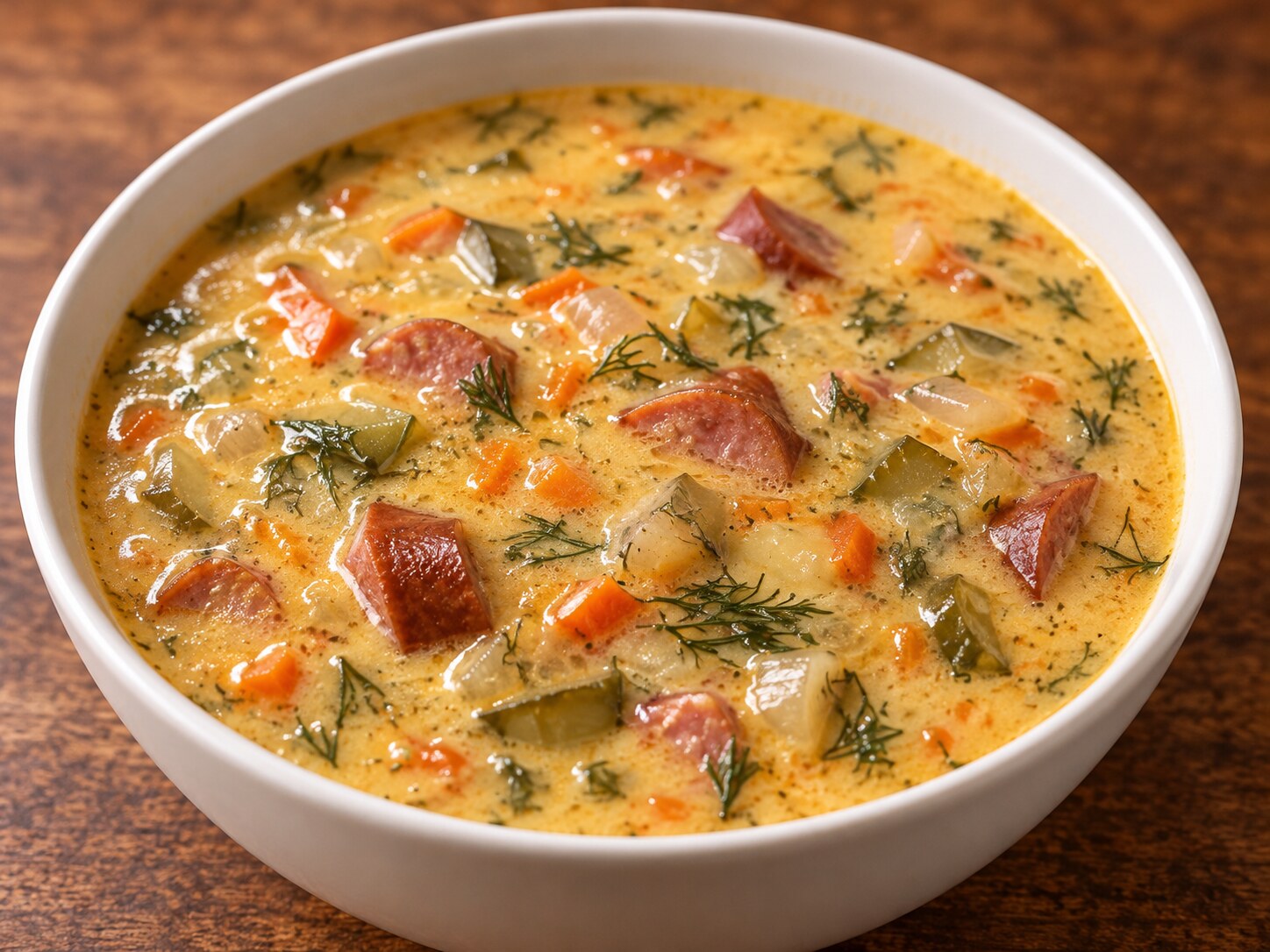
For our soup, we’re using our homemade Grandma’s Deli Dill Pickles. Ours are vinegar-pickled, so their acidity comes from added vinegar rather than the fermentation that defines traditional ogórki kiszone. That changes the flavor, and we build the tang gradually so it works with the rest of the bowl.
We also bring in browned smoked kielbasa. Its savory richness gives the potatoes and pickles something substantial to work against. Sour cream rounds out the broth, and fresh dill keeps its aroma bright.
Then come the brown-butter caraway sourdough croutons. They add a toasted, crunchy finish that holds up just long enough to make you chase another one around the bowl.
These are our choices for this recipe, inspired by ogórkowa and adapted to the ingredients we make and enjoy at home.
That is what we want this soup series to explore: learning where a dish comes from, understanding what gives it its character, and bringing that inspiration into our own cooking with care.
This time, it starts with a jar of pickles we already love. A little smoke, a pot of potatoes, a handful of dill, and suddenly that summer preserving project has become dinner on a cool Ohio evening.
Comments
Loading comments…